Every event organiser has a recurring nightmare, and it rarely involves the keynote speaker. It is the moment tickets go on sale, the traffic spikes, and the checkout page decides to take a leisurely pit stop while thousands of would-be attendees stare at a spinning wheel. So when the most-watched sport on the planet quietly changes the company that runs its ticketing, it is worth pulling into the garage to see why.
Formula One has named Fever as its new official ticketing supplier on a five-year deal starting in 2027, replacing Monaco-based Platinium Group, which had handled the job for well over a decade. According to Formula One's own announcement, Fever will take over all official general admission, local hospitality and Paddock Club sales, and will rebuild the ticketing experience on F1.com with what the sport calls more sophisticated technology to improve discoverability, purchasing and customer service. In plain English: the front door is getting a new lock, a clearer sign, and a queue that actually moves.
What actually changed, minus the engine noise
This is the first time F1 has switched ticketing operators in over a decade, which in technology years is roughly three ice ages. The incumbent did not lose a race so much as lose a relay: the sport decided that the platform fans use to find and buy tickets had become a competitive asset in its own right, not just a back-office utility. Here is the swap at a glance.
| Detail | Outgoing: Platinium Group | Incoming: Fever |
|---|---|---|
| Tenure | Over a decade as F1 ticketing operator | Five-year deal from 2027 |
| Scope | Official ticket sales | General admission, local hospitality and Paddock Club |
| Headline focus | Transactional ticketing | Discoverability, purchase journey and customer service |
| Existing F1 link | Long-standing supplier | Already runs ticketing for the Madrid race through 2035 |
Fever is not a stranger to the paddock. As Fever confirmed, it already runs ticketing, fan engagement and entertainment programming at Ifema Madrid through 2035, which includes the inaugural Spanish Grand Prix at the new Madring circuit. So F1 is not gambling on a debutant. It is promoting a platform it has already seen perform under pressure.
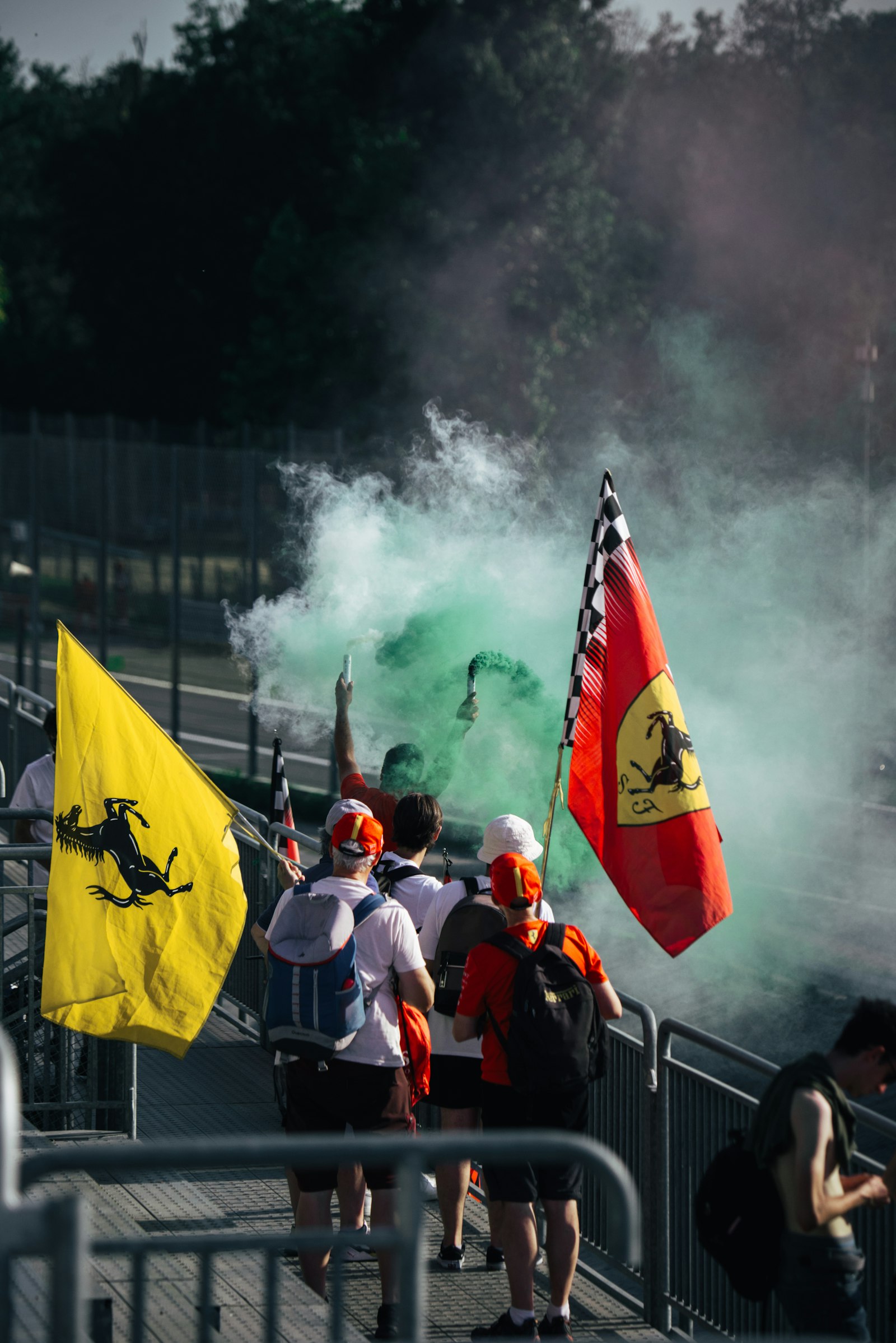
The number that should make every organiser sit up is this one, cited by F1's commercial team: only about one per cent of Formula One's enormous global fanbase will ever physically attend a race. That makes the rare ticket buyer precious, and it makes the buying experience the single most important touchpoint the sport controls.
If only one in a hundred of your audience ever makes it through the turnstile, the checkout page is not plumbing. It is the showroom.
What this means for event organisers
You do not need a grid full of carbon fibre to take something from this. The logic that pushed F1 to switch is the same logic that applies to a conference, a trade show, a summit or a gala.
First, the buyer journey is the brand. F1 did not say it wanted cheaper ticketing. It said it wanted better discoverability and a smoother purchase. When a sport with a Netflix-fuelled audience explosion decides its biggest experience risk is the registration flow, that is a flashing pit board for everyone selling tickets to anything. If your sign-up form has more steps than a Monaco hairpin, you are leaking attendees before they ever reach the content.
Tired of Fee Announcements? Go Flat
eventcloud charges one subscription with no per-ticket fees, so platform news stops being budget news.
Second, switching is no longer unthinkable. The reason F1 stuck with one operator for a decade is the reason most organisers stick with whatever they signed up for years ago: migration sounds terrifying, data lives everywhere, and nobody wants to be the person who broke the on-sale. But the appetite for change is rising precisely because the cost of a clunky platform now shows up directly in conversion rates. If the worry is purely the fear of moving, that is a reason to scrutinise your platform, not a reason to renew on autopilot.
Third, ask what you are actually paying for. F1 is bundling ticketing with fan engagement and a rebuilt interface, because it understands that a ticket is the start of a relationship, not the end of a transaction. For B2B organisers, the equivalent questions are blunt: does your registration and ticketing platform give you clean attendee data, a checkout that converts, and pricing that does not punish you for selling more tickets? If the answer involves a shrug and a per-attendee surcharge, you are funding someone else's pit crew.
The bigger pattern nobody is naming out loud
Here is the context the headlines skipped. The F1 deal is not a one-off. It is part of a broader 2026 reshuffle in which venues and rights holders are treating ticketing as strategic infrastructure rather than a commodity to be renewed and forgotten. Different properties, same realisation: whoever controls the buying experience controls the data, the relationship and a meaningful slice of the revenue.
There is a historical rhyme here too. For most of the past twenty years, ticketing technology competed on transaction reliability. Could it handle the spike on on-sale day without falling over? That was table stakes. The new battleground is discoverability and experience: helping the right person find the right event, buy in seconds, and come back next year. F1 swapping operators after a decade is the clearest signal yet that reliability alone no longer wins the contract.
Watch this space, because the next phase is already visible on the horizon. Expect more rights holders to fold engagement, recommendations and even AI-assisted discovery into the ticketing layer, and expect the question every organiser asks of a platform to shift from "will it cope?" to "will it grow my audience?" The teams that treat their registration flow as a competitive asset, the way F1 just did, will quietly out-recruit the ones still treating it as a necessary evil.
The chequered flag
You will probably never sell a Paddock Club ticket, and your annual conference is unlikely to be soundtracked by screaming V6 hybrids. But the principle that drove this deal is refreshingly transferable: the moment someone decides to attend your event, the experience you hand them should feel like an upgrade, not an obstacle. At eventcloud we have always argued that the checkout is the most underrated part of the funnel, and that flat, predictable pricing beats per-attendee penalties every time you actually succeed at filling the room. If the fastest sport on earth has decided its buying experience deserves a full rebuild, the quarterly summit in hall three can probably spare a look at its own. Worth a quick comparison of what your platform really costs before your next on-sale.