It is 11pm on a Tuesday and someone is staring at your registration page trying to work out whether the two-day pass includes the workshop, whether their colleague can attend just the Thursday, and whether the £40 difference between Standard and Standard Plus buys them anything other than a slightly better lanyard. They will not email you. They will not ring you. They will close the tab, tell themselves they will sort it out next week, and never come back.
Nobody counts those people. There is no line in your reporting called "left because we did not answer the question." Which is what makes the numbers that just came out of a Belgian racetrack quietly alarming.
Seventeen thousand questions at Spa
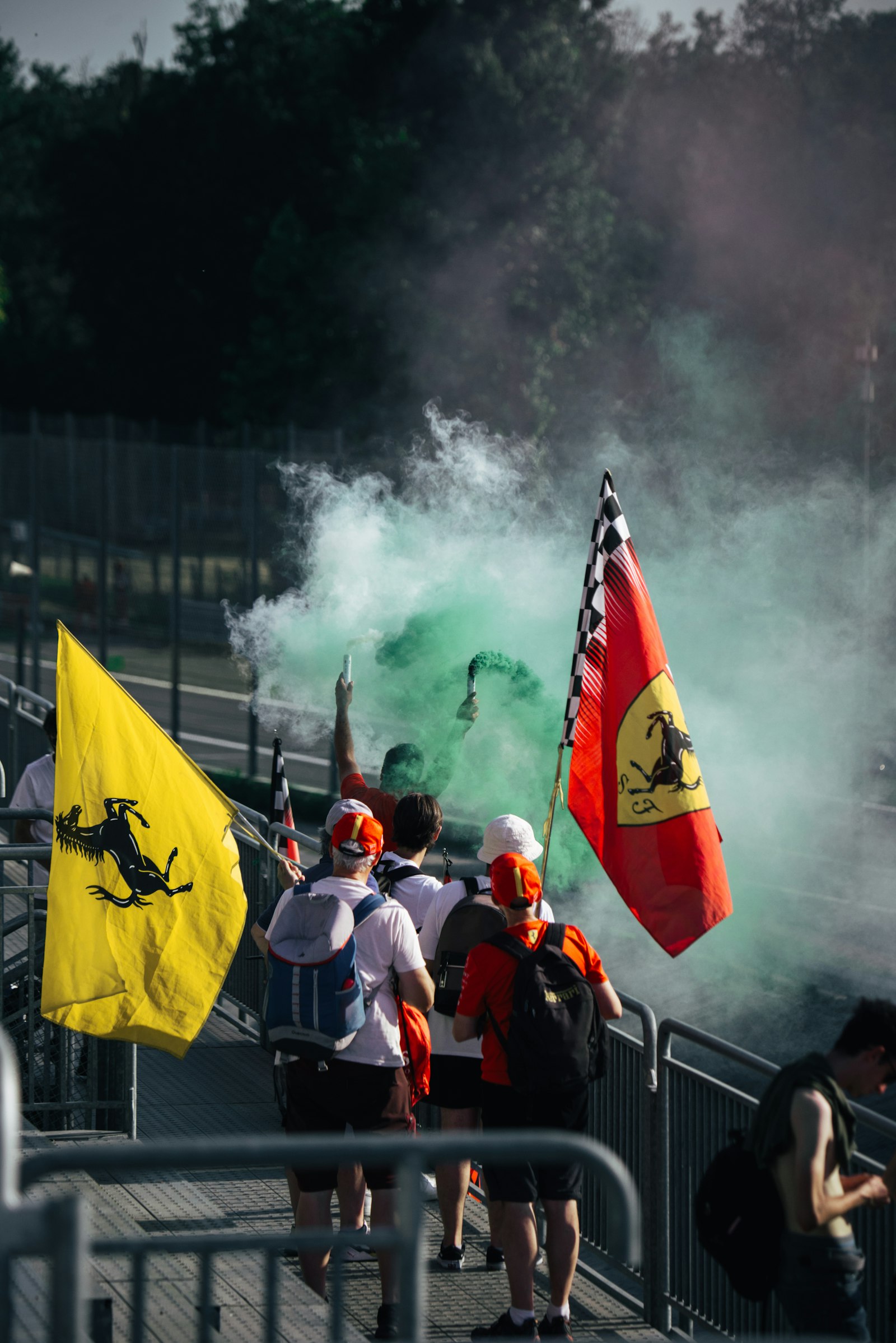
Spa Grand Prix, the promoter behind the Formula 1 Belgian Grand Prix at Circuit de Spa-Francorchamps, put an AI concierge called Jack on its ticketing site at the start of June. Jack was built by Napster on its own API, and both parties billed it as one of the first proper agentic AI deployments in live motorsport ticketing. It answers questions about multi-day packages, parking, camping, hospitality tiers and where exactly you will be sitting, in whatever language the visitor happens to be typing in.
The results from the first thirty days were published this week, ahead of the 2027 ticket window opening. According to Napster's announcement and coverage by TheTicketingBusiness, between 2 June and 2 July Jack held 17,407 conversations across 21 languages.
| Metric | First 30 days (2 June to 2 July 2026) |
|---|---|
| Conversations with fans | 17,407 |
| Languages handled | 21 |
| Anticipated additional revenue | $285,000 (roughly £214,000 / €251,000) |
| Lift in clickthroughs to checkout | 70% |
| Customer service hours saved | More than 1,200 |
| Fans using the 360-degree seat view | Nearly 700 |
Napster chief executive John Acunto called the figures proof that AI agents give human teams their time back while delivering measurable return. Spa Grand Prix boss Vanessa Maes framed it as attention at scale: thousands of fans getting a personal level of service without the promoter hiring a call centre the size of Wallonia.
Do the maths, then do it again
Take the numbers apart and they get more interesting than the headline.
That $285,000 spread across 17,407 conversations works out at roughly $16 of anticipated revenue per conversation. Not per sale. Per conversation. Every single exchange, including the ones that went nowhere, carried a measurable expected value. Which is another way of saying every unanswered question on a ticketing page carries a measurable cost, and always has, and nobody was invoicing anyone for it.
Then there is the 1,200 hours. Over thirty days that is forty hours a day of human labour, or about seven and a half full-time months of work compressed into a single calendar month. Spa Grand Prix did not have seven and a half extra people. Nobody does. So before June, those 1,200 hours of questions were not being answered by staff. Most of them were not being answered at all.
Seventeen thousand conversations is not a customer service statistic. It is a map of everything the page forgot to say.
What this means for event organisers
Here is the uncomfortable translation for anyone running a conference, trade show or summit rather than a Grand Prix. An F1 weekend is what the industry politely calls a high-consideration purchase: multiple days, tiers, add-ons, travel, a seat map, and a price tag that makes people think twice. Look at that list again. It is your event. A three-day conference with early bird pricing, a workshop day, a gala dinner, exhibitor passes, group rates and a team discount is exactly as complicated as a race weekend, just with worse catering and fewer helicopters.
Tired of Fee Announcements? Go Flat
eventcloud charges one subscription with no per-ticket fees, so platform news stops being budget news.
Three things worth stealing from Spa:
The questions are the data. Even if you never deploy an AI anything, the logs of what people ask before buying are the single most useful document your marketing team could read. Spa now has 17,407 of them. What have you got? A contact form nobody fills in.
Language is a revenue setting, not a nicety. Twenty-one languages on one European motorsport event. If your international delegates are reading an English-only registration flow and silently converting currency in their heads, you are taxing them for attending.
Seeing the seat matters. Nearly 700 people checked a sightline before committing to a tier. The B2B equivalent is showing what a pass actually gets you, session by session, rather than a bullet list of vague entitlements. People buy what they can picture.
None of this requires a Formula 1 budget. Most of it requires a registration flow that explains itself before someone has to ask, and clear, unambiguous pricing that does not need a decoder ring.
The FAQ page did not die of natural causes
This is the fourth attempt the industry has made at solving the same problem, and it is worth remembering how the first three went.
First came the FAQ page, which answered the twelve questions the organiser thought of and none of the ones attendees actually had. Then came live chat, which worked beautifully during office hours and left everyone else looking at a form promising a reply within two working days. Then came the decision-tree chatbot, an interface so widely loathed that "talk to a human" became the most clicked button in customer service history. Each generation was cheaper than the last and worse at the actual job, because none could handle a question phrased in a way nobody had anticipated.
What is different now is not that the bot is friendlier. It is that the bot can read the inventory. Jack is not reciting a script; it is reasoning over live packages, tiers and availability. That is the whole distinction between a chatbot and an agent, and it is why the clickthrough number moved instead of the satisfaction score.
Watch this space: when the agent works for the buyer
Now flip it round, because this is the bit nobody is discussing yet.
Right now the AI sits on the seller's website, working for the promoter. Within a year or two, a meaningful share of delegates will arrive with their own agent, one that has been asked to find a suitable conference in Q1, compare three of them on price and agenda, and book the cheapest option that clears the CPD requirement. That agent will not squint at your beautifully art-directed hero image. It will try to read your event data, and if it cannot, it will move on to an event it can read.
Which means the practical prep for the agentic era is deeply unglamorous: structured event data, machine-readable pricing, sessions with real metadata, and a registration flow that does not hide the important information inside a PDF. The organisers who win the next round will be the ones whose events are legible to software, not just to humans on a laptop at 11pm.
At eventcloud we have always been slightly obsessed with the boring end of this problem, because a registration page that answers the question before it is asked has never needed an AI to rescue it. Jack is doing brilliant work at Spa. The best outcome for the rest of us is building pages that give it less to do.