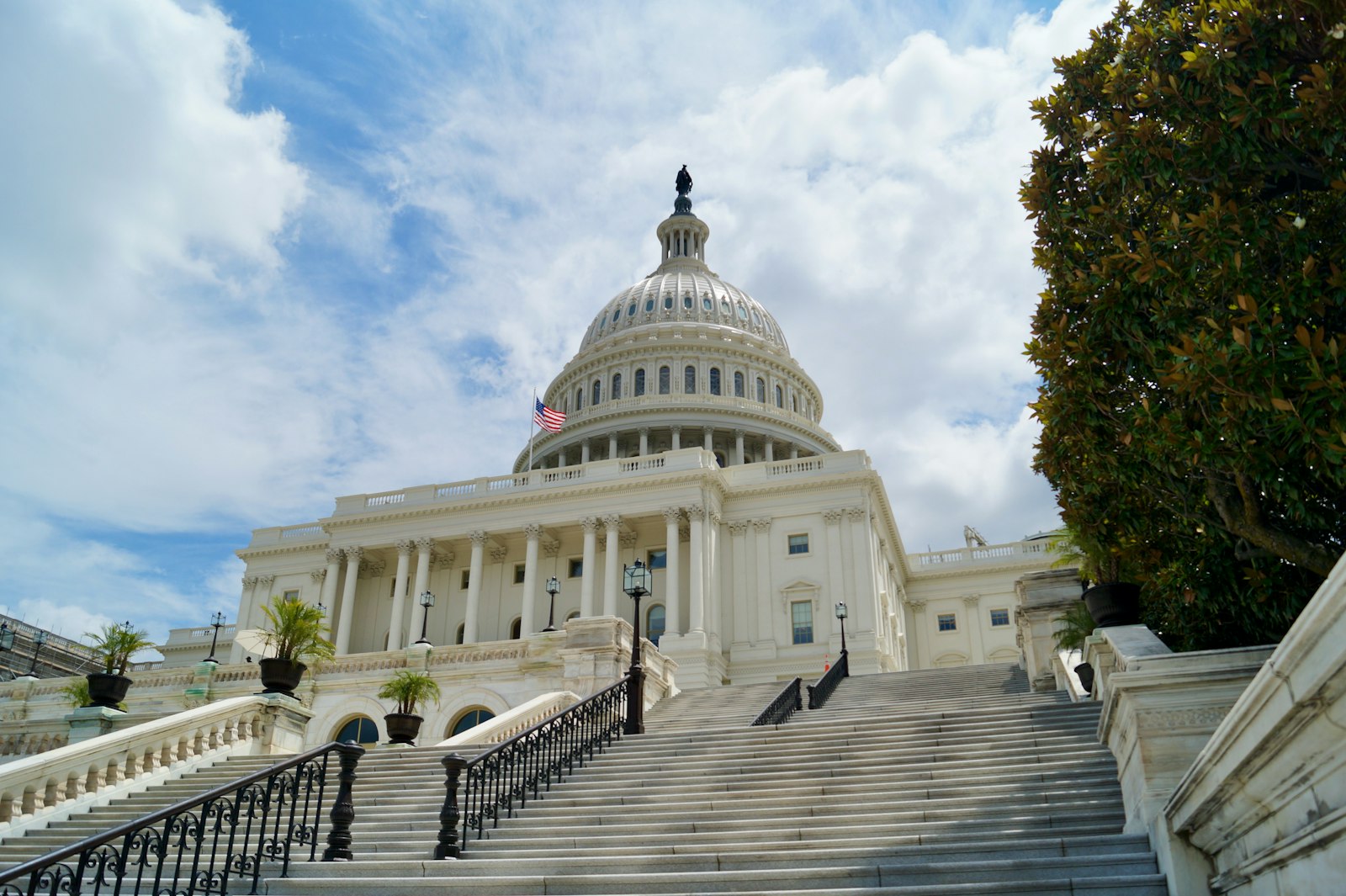
Every event organiser has had this conversation. An attendee emails to ask why a 45 pound conference pass turned into 52 pounds at the checkout, and somebody on your team has to explain the booking fee, the service fee and the payment processing charge in a tone that makes clear none of it was their idea. Last Wednesday, that exact conversation got a much bigger room and a much better microphone, because Congress spent a morning arguing about whether the price on the button should be the price you pay.
On 22 July 2026, the House Energy and Commerce Subcommittee on Commerce, Manufacturing and Trade held a hearing with the deeply un-catchy title "Legislative Proposals to Strengthen Consumer Protection in a Changing Marketplace". Buried in a bill list that also covered nitrous oxide safety and app store competition were two pieces of ticketing legislation, and one of them carries a name that tells you everything about how long this fight has been running.
The Hearing That Was Not a Vote
The two ticketing items on the agenda, according to the subcommittee's own published bill list, were H.R. 2713, the Mitigating Automated Internet Networks for (MAIN) Event Ticketing Act, and the BOSS and SWIFT Act of 2026. The latter appeared with a blank space where its bill number should be, which is a polite way of saying it is still draft legislation.
John Breyault, vice president of public policy, telecommunications and fraud at the National Consumers League, testified in support of both. As TicketNews reported, his group called BOSS and SWIFT the gold standard for live event ticketing reform, and argued that federal rules need to cover the whole ticketing chain rather than pointing exclusively at brokers and the resale market.
No vote was taken. Nothing advanced. If you want a single sentence summary of United States ticketing policy over the past seventeen years, that is a reasonable candidate.
The name, in case you have not decoded it, references the onsale controversies around Bruce Springsteen and Taylor Swift. The original BOSS legislation traces back to reforms first proposed by the late Representative Bill Pascrell in 2009, with an expanded version introduced alongside Representative Frank Pallone in 2023 and a Senate companion from Senators Richard Blumenthal, Mazie Hirono and Edward Markey. Pallone now carries it. A bill named after two artists whose fandoms have since had entire economic cycles named after them is still waiting for a number.
Three Bills, Three Levels of Ambition
It helps to see the options side by side, because they are frequently discussed as though they were interchangeable. They are not.
| Bill | Status | Core provisions |
|---|---|---|
| TICKET Act | Passed the House 409 to 15, placed on the Senate calendar | Upfront all-in pricing, rules on speculative listings, refunds for cancelled or significantly postponed events, FTC enforcement |
| BOSS and SWIFT Act of 2026 | Draft, no House bill number assigned | All of the above plus disclosure of how many tickets go on public sale, holdback visibility, transfer and resale protections, secondary marketplace identification |
| MAIN Event Ticketing Act (H.R. 2713) | Introduced, before the subcommittee | Updates the 2016 BOTS Act: stronger access controls, mandatory reporting of ticket limit circumvention, vendor safeguards, an FTC complaint portal |
The MAIN Event Ticketing Act, introduced by Representatives Diana Harshbarger and Troy Carter, is the quiet one, and possibly the most operationally interesting. It shifts responsibility for stopping automated ticket buying onto the platforms themselves rather than relying on chasing individual brokers after the fact.
What All-In Pricing and Per-Ticket Fee Transparency Mean for Event Organisers
Here is the part most conference and trade show organisers skip, on the assumption that ticket bot legislation is a stadium problem. It is not, and the reason is the fee language.
Both the TICKET Act and BOSS and SWIFT would codify all-in pricing: the displayed price must include mandatory non-government fees from the very start of the purchasing process. That obligation does not care how big your event is. Sell 60,000 seats to a rock show or 340 delegate passes to a supply chain summit, and the rule applies just the same. If your registration page shows 495 and your checkout shows 528.40, you are on the wrong side of the direction of travel, regardless of how modest your event is.
Tired of Fee Announcements? Go Flat
eventcloud charges one subscription with no per-ticket fees, so platform news stops being budget news.
Fee transparency has stopped being a competitive differentiator you can brag about in a pricing page footnote. It is quietly becoming the legal floor.
Three practical consequences for organisers who sell tickets or paid registrations:
Know your true per-ticket fee. Not the headline percentage, the actual number a buyer sees. Platform service fee, payment processing, and any per-order charge, added together, on a real ticket price. Most organisers who do this calculation for the first time are unpleasantly surprised.
Decide who absorbs it, and say so. Passing fees to attendees is legitimate. Passing them invisibly and revealing them at step four of checkout is the practice being legislated against. Absorbing fees into the face value is the cleanest answer, and it only works if you know the number.
Check what your platform actually displays. Some registration systems present an all-in price by default. Some present it only if you configure it. Some cannot do it at all. This is worth ten minutes of your time before it becomes worth a lawyer's.
The bot provisions matter more than they look, too. Anyone who has run a free or heavily subsidised event has watched a registration list fill with obviously synthetic entries, or seen a promo code leak and get hammered by automation within the hour. Access controls, rate limiting and the ability to spot circumvention attempts are not luxury features for enterprise clients. They are basic hygiene, and one of the bills on the table would make them a documented obligation for ticket issuers.
Watch This Space: The Rules Are Converging, Quietly
Here is the context the hearing coverage largely left alone. The United States is not doing this in isolation, and it is not even doing it first.
Ontario has been rewriting a resale price cap after discovering that face value is a slippery concept when fees are involved. Vermont has capped resale at independent venues. In Europe, consumer groups have been pressing the European Commission to address dynamic pricing in live events through the Digital Fairness Act. The United Kingdom has its own resale consultation and enforcement activity running. Different legislatures, different mechanisms, and a strikingly similar underlying instinct: that the number a buyer sees first should be the number they pay last.
For an organiser running events across multiple markets, the useful conclusion is not to track every bill. It is to notice that no jurisdiction anywhere is moving toward more hidden fees. The direction of travel is one way. Building your pricing to the strictest standard you might face is significantly cheaper than rebuilding it three times.
Worth watching: whether the TICKET Act finally clears the Senate, since it is the bill most likely to move and would set the federal baseline for all-in pricing. BOSS and SWIFT remains the more complete proposal and the less likely one, not least because previous versions drew opposition from music industry groups over the transfer and resale protections.
The Short Version
A subcommittee hearing with no vote is not usually news. This one is a useful prompt, though, because it puts a plain question in front of every organiser who sells a ticket: if all-in pricing became mandatory tomorrow, would your checkout need changing?
For organisers on percentage-plus-per-ticket fee models, the answer is usually yes, and the maths is rarely flattering. It is one of the reasons we built eventcloud's pricing as a flat subscription with no per-ticket cut: when there is no per-ticket fee, there is nothing to disclose, bury or restructure when the law changes its mind. Legislation moves slowly. Attendee patience with surprise fees moved on a while ago.