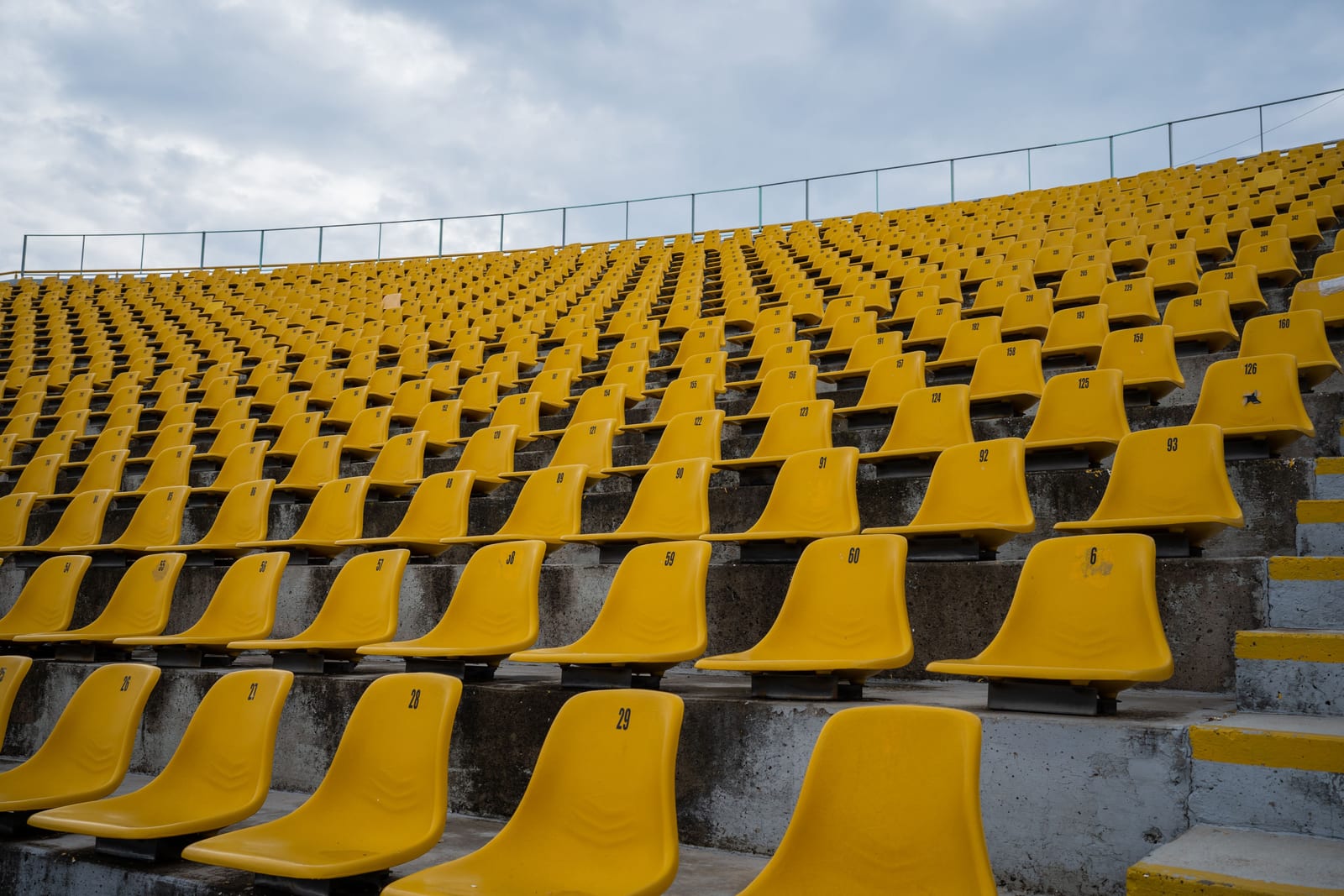
French football club AS Saint-Étienne will now resell your seat if you do not turn up. From the 30th minute of any sold-out match at the Geoffroy-Guichard, unused seats in the Henri-Point Stand go back on sale through the club's official app, and the buyer walks in at half-time through a dedicated gate. The club calls it the "late ticket", and it is the most interesting thing to happen to no-shows in years.
What Saint-Étienne actually launched
The mechanics, announced this week, are simple and rather elegant. When a match is sold out, the club's access-control system knows by the 30th minute exactly which seats in the Henri-Point Stand have not been scanned. Those seats are released back into the app at a reduced price (French outlet Sport Buzz Business reports a 25 per cent discount), and the offer is restricted to supporters already in the immediate vicinity of the stadium. After purchase, a temporary QR code appears in the buyer's app and admits them through one dedicated door at half-time.
The Henri-Point Stand is the largest at the 41,965-capacity ground, with 10,315 seats including 1,200 reserved for visiting fans. Ticketing and access control manager Anaïs Durand's pitch to fans is that the Cauldron, as the ground is known, should be fuller and louder for the second half, with no more dark patches in the stands.
Why no-shows are a real cost, not a cosmetic one
A no-show at a sold-out event is inventory you were paid for that still damages you. Sports economist Dominik Schreyer of the WHU Otto Beisheim School of Management told TheTicketingBusiness that empty seats send a bad signal to exactly the people organisers most want impressed: broadcasters, sponsors and the VIPs sitting in hospitality, all of whom were promised a full house. Crowds also still shape home advantage, which for a football club is a sporting cost on top of a commercial one.
Conference and trade show organisers know a version of the same pain. The sponsor who paid for exposure to 5,000 delegates counts the room, not the registration report. Catering was ordered for the full list. And the 200 people on your waitlist stayed home while 200 registered seats sat empty.
A no-show is not really an empty-seat problem, it is a data problem. By minute 30 the club knows precisely which of 41,965 seats are dark, and for the first time it is doing something commercial with that knowledge.
What this means for event organisers
The clever part is not the discount, it is the plumbing. Three capabilities make a late ticket possible, and they are worth checking for in any platform you run, whatever your event type. First, real-time entry data: the system must know live which tickets have been scanned, not reconcile it the morning after. Second, the ability to create and sell a new ticket type instantly, with its own price and its own capacity, while the event is running. Third, mobile delivery fast enough that the QR code lands before the buyer reaches the gate. None of that is exotic any more; browser-based QR check-in gives even a small organiser the same live picture of who is actually in the room that a Ligue 1 club has.
Tired of Fee Announcements? Go Flat
eventcloud charges one subscription with no per-ticket fees, so platform news stops being budget news.
For conferences the equivalent play is not mid-session resale but waitlist release: if registration closes full and your scan data shows 15 per cent of badges unclaimed an hour in, that is a defensible moment to admit the standby queue. The setup and ease-of-use question is whether your platform lets you do it that afternoon, without a support ticket.
The industry was fining latecomers three weeks ago
What makes the Saint-Étienne move striking is that the industry has mostly been treating late arrival as a sin to tax rather than a vacancy to fill. In August, UK gig-goers reported £15 late-entry fees for missing timed entry slots. Saint-Étienne inverts the logic: instead of punishing the person who did not arrive, it monetises the seat they left behind and upgrades a fan who was outside the ground. Same empty seat, opposite philosophy. One approach extracts a fee from your most loyal buyer on a bad night; the other adds a new attendee, a new data point and second-half atmosphere.
There are honest limits. Half-time entry only works where an event has a natural interval, the resale price undercuts the season-ticket holder's cost per match if it is set carelessly, and the away-fan block is off limits for obvious reasons. And because the offer is geofenced to people already near the ground, it will fill dozens of seats, not thousands. This is margin recovery, not a new revenue line.
The bit worth stealing
Most organisers already collect scan data and do nothing with it until the post-event report. Saint-Étienne's experiment treats the live gate feed as sellable inventory, and it needed no new hardware to do it, just an app, a QR code and a door. If your registration setup can add a ticket type in minutes, you can run the same play at a summit with a lunch break. The Cauldron will report back on whether fuller really is louder.