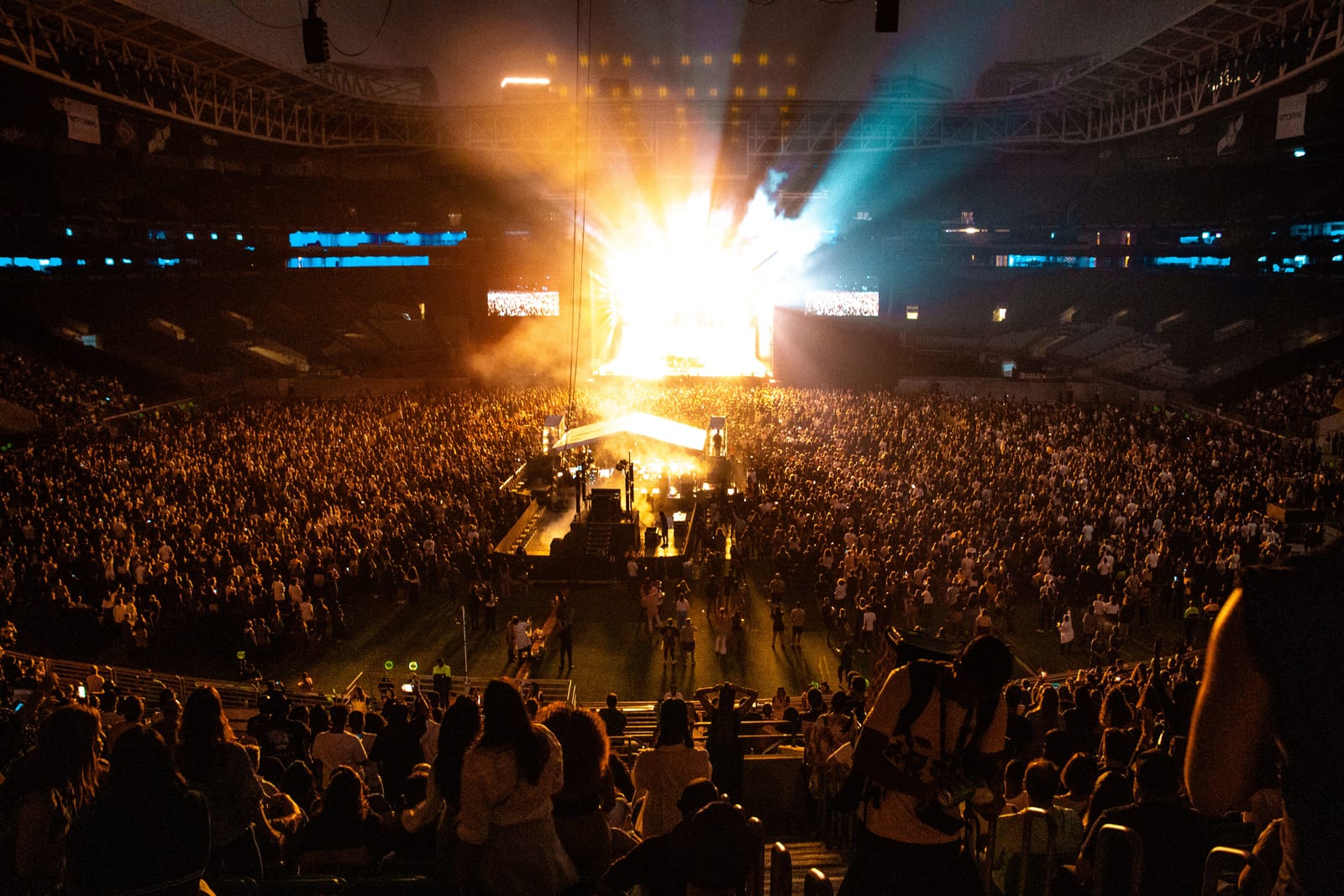
Wembley Stadium has closed the biggest concert summer in its history: 34 shows between 6 June and 12 September, more than 2.5 million music fans through the turnstiles, and a 30% increase on the 26 concerts that set the previous record only twelve months earlier. For an organiser, the interesting number is not the headline act. It is what happens to every per-head cost in an operation when the volume climbs by a third in a single season and the venue is exactly the same size it was last year.
What did Wembley actually deliver?
According to TheTicketingBusiness, the 90,000-capacity stadium opened its season with Capital's Summertime Ball on 6 June and closed it on 12 September with Diljit Dosanjh, the first South Asian artist to headline the venue. In between came Harry Styles' twelve-night residency, which Guinness World Records certified as the longest single run by an artist at the stadium, beating Coldplay's ten-show record from 2025. Bruno Mars played six nights, The Weeknd five, and Bon Jovi, Luke Combs and My Chemical Romance three each. Combs became the first solo country artist to headline Wembley.
TicketNews adds the operational framing: 35 major events across a 98-night window once the AEW All In wrestling show on 30 August is counted, which works out at an event every 2.8 nights for more than three months. Stadium director Mark Lynch described the 2.5 million figure as proof of the scale the national stadium can now deliver, and pointed out that last year's record had stood for only one year before being beaten.
Where did the growth come from, if the stadium did not get bigger?
Residencies. The average attendance per show, at roughly 73,500, is what you would expect from a 90,000-seat bowl in concert configuration, so the extra 600,000 or so fans did not come from squeezing more people into each night. They came from more nights, and the nights came from artists booking runs of three, five, six and twelve dates rather than a single stop. A twelve-night residency is a different commercial object from twelve one-nighters: one load-in, one stage build, one set of staff rosters, and one ticketing configuration reused a dozen times.
That is the lesson hiding inside the record. Wembley did not grow by finding a bigger room. It grew by running the same room more often, and by structuring its calendar so that each additional night cost less to stage than the one before it.
The stadium did not get 30% bigger. It got 30% busier, and a busy fixed asset is the cheapest kind of growth there is, unless somebody is charging you per head for it.
What this means for event organisers
Scalability and event fit is the lens here, and it applies to conference and trade show operators as much as to promoters. Three points carry over directly.
The first is about check-in throughput. Moving 73,500 people through the gates 34 times is roughly 2.5 million individual scans in fourteen weeks, and stadiums are engineered for it: dozens of turnstiles, staggered gate openings, and entry that does not depend on a queue at one desk. A conference with 3,000 delegates arriving between 08:30 and 09:15 faces the same shape of problem at a smaller scale, and usually solves it worse, with four laptops and a printer. The stadium answer is to make every gate a full check-in point rather than a funnel to one, which in software terms means QR check-in that runs on any phone so the number of lanes is the number of staff you can spare, not the number of devices you hired.
Tired of Fee Announcements? Go Flat
eventcloud charges one subscription with no per-ticket fees, so platform news stops being budget news.
The second is about repeat formats. A residency is the promoter's version of a multi-day pass or an event series: build once, sell many. Organisers who run a quarterly summit, a regional roadshow or a five-city training tour are running residencies whether they call them that or not, and the cost question is whether each additional edition carries its own platform fee. On a per-event or per-ticket pricing model it does. On a subscription it does not.
The third is about what a per-head cost does at this volume. If a platform charged even £1 per ticket, Wembley's summer would carry £2.5 million in fees before a single percentage point of service charge was added, and every extra night, which is the cheapest night to stage, would be the most expensive night to ticket. The stadium's own ticketing arrangements are its own business, but the arithmetic is universal: percentage and per-ticket models tax the growth that a fixed venue is designed to deliver. eventcloud's answer is a flat subscription per user with unlimited events, tickets and registrations, so the platform bill for a summer of 34 shows is the same as for one; the pricing page sets out what is and is not included. Plainly: eventcloud is built for conferences, trade shows and corporate events rather than for stadium concert onsales, and the subscription is per user from one seat, so a promoter with ten box office staff pays for ten.
The context the coverage skipped: London's summer was a test of the whole city
Wembley's 2.5 million did not arrive in isolation. The O2 reported in August that 35% of buyers for its Ariana Grande residency came from overseas and that 47% of UK buyers travelled from outside London, so a meaningful share of the Wembley crowd was also filling hotels, trains and restaurants across the capital. That is precisely the visitor economy that England's mayors were handed the power to tax this month through an overnight visitor levy set as a percentage of the room rate. A record concert season and a new levy on the beds those fans sleep in landed within a week of each other, and the organisers who notice the connection first are the ones who will be pricing 2027 accurately.
There is a second, quieter piece of context. Wembley's record shows are stacking up in a market where UK festivals have been cancelling at a historic rate and where mid-sized venues report thinner margins every year. The live business is not growing evenly; it is concentrating, into venues large enough to make residencies pay and into artists big enough to fill them twelve times. For everyone operating below that tier, the takeaway is not to chase stadium numbers. It is to copy the stadium's structure: reuse the build, run more nights, add lanes rather than desks, and make sure the cost of each additional attendee is as close to zero as the venue's own economics already are.
What happens next
Wembley switches back to football and to England's UEFA Nations League fixtures, plus the first American college football game staged at the stadium on 19 September. The 2027 concert calendar will show whether 34 was a ceiling or a step, and the early signs, with Oasis Live '27 already booked into eleven nights at the Etihad in Manchester rather than London, suggest the residency model is spreading to other cities rather than staying put. The organisers who should be watching are not promoters. They are anyone whose event has a fixed venue, a variable crowd, and a supplier somewhere in the stack who still charges by the head.