If you are running a multi-day festival, the humble wristband is doing a lot of quiet heavy lifting. Festival wristband ticketing turns a paper ticket into a thing that lives on someone's wrist for three days of sun, rain, mud and questionable decisions, while still controlling who gets in, which day, and which zone. This guide covers how to issue and scan wristbands for a multi-day event: the two main technologies, how re-entry actually works, day-specific access, and the setup choices that decide whether your gates flow or seize up.
The short version: you are choosing between QR code wristbands and RFID wristbands, and the right answer depends on your gate volume, your budget, and how much abuse the bands will take. Both beat a paper ticket that dissolves in the first downpour.
Festival wristband ticketing: QR versus RFID
A QR code wristband is exactly what it sounds like: a printed code on a durable band that staff scan with a phone or handheld reader. It is cheap, it works, and it ties each attendee to their order. The catch is line of sight. QR scanning needs the code clean, undamaged and oriented the right way, and in the real world a code that has spent a day underneath a jumper sleeve takes a few goes. Budget roughly 3-6 seconds per attendee once you account for finding the code, lining up the scanner and the occasional failed read.
RFID wristbands carry a tiny chip instead of a printed code. A reader picks them up from any direction, through dirt, rain and sweat, in about 0.1-0.3 seconds, and staff do not need to line anything up. Large festivals routinely push 15-25 attendees per lane per minute through RFID portals. Each scan records entry and re-entry, so you get an accurate live count of who is actually inside, which matters a great deal the moment a safety officer asks.
| Feature | QR code wristband | RFID wristband |
|---|---|---|
| Read time per person | 3-6 seconds | 0.1-0.3 seconds |
| Throughput per lane | Lower, line of sight needed | 15-25 per minute |
| Weather and wear | Fails if code is dirty or bent | Reads through mud, rain, sweat |
| Live headcount and re-entry | Possible but slower | Accurate, automatic |
| Lost or stolen band | Harder to void cleanly | Deactivate instantly |
| Cost per band | Cheapest | Higher unit cost |
Pick QR when your budget is tight and your gates are calm. Pick RFID when a slow gate turns into a crush, because at that point speed is not a nicety, it is a safety feature.
How re-entry actually works
Multi-day festivals live and die on re-entry. People leave to sleep, eat, or fetch the charger they forgot, and they need to come back without a fresh ticket. The mechanism is simple in principle: each band has one unique identity, and the system logs every scan as either an entry or an exit. That running record is what lets a band be reused all weekend and still give you a truthful count of the crowd inside at any moment.
The mistake to avoid is treating re-entry as an afterthought you configure at the gate on day one. Decide up front whether re-entry is unlimited, capped, or zone by zone, and make sure both entry and exit points are scanning. If you only scan people in, your headcount inflates all day and your "inside now" figure becomes fiction, which is exactly the number you do not want to be guessing about during an incident.
It also pays to think about the awkward middle cases before they happen at 11pm on a Saturday. What does a band do if it is scanned twice in quick succession at the same gate, a common thing when a nervous new steward double-taps? What happens when someone leaves through a gate that is not scanning exits, then tries to return? Writing down these rules in advance, and briefing your gate teams on them, turns a potential argument at the barrier into a two second decision the scanner has already made for them.
What Would Zero Booking Fees Save You?
eventcloud charges a flat subscription, not a cut of every ticket. Compare it with what your current platform takes.
Day-specific and zone access
A three-day pass and a Saturday-only pass should not look identical to a scanner. The clean way to handle this is to encode the entitlement in the band's record rather than relying on wristband colour alone. Colour is a useful human backup, but the scan is the source of truth: a Saturday band scanned on Sunday should turn the reader red and the staff member's decision easy.
The same logic covers zones. VIP areas, backstage, camping, artist compounds and the bar you would rather teenagers did not reach are all just access rules attached to the band. Set them once, and the gate does the arguing for you. This is the bit that turns a wristband from a pretty souvenir into an access control system, and it pairs neatly with sensible multi-day pass pricing so the entitlement someone paid for is the entitlement the scanner enforces.

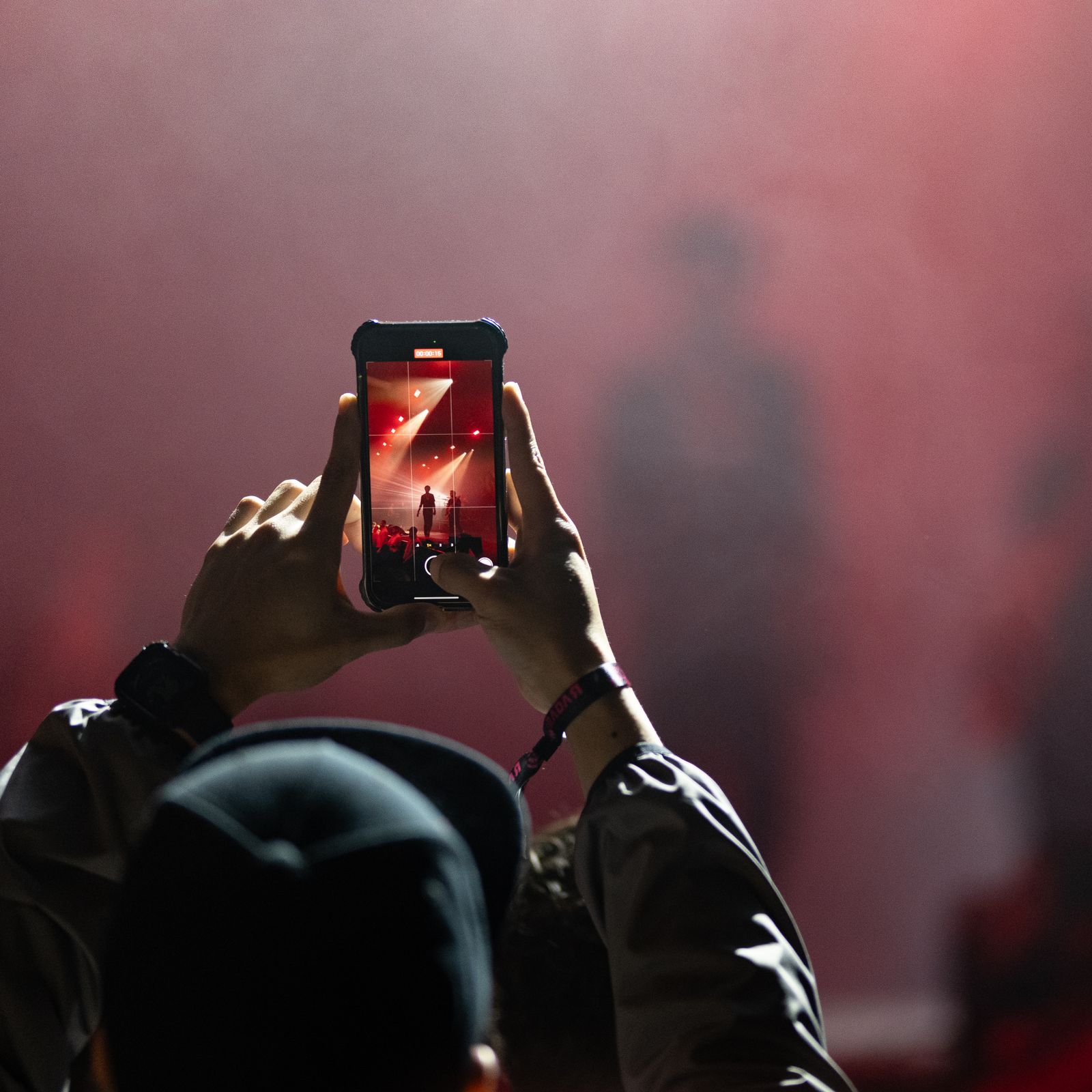
Three days, one wristband, zero paper tickets turning to pulp in the rain. Credit: A. Darmel / Pexels
Issuing the bands without chaos
Getting bands onto wrists is its own logistics puzzle, especially when thousands arrive at once. A few things that keep the entry gate moving:
Link every band to its order before the gates open. Whether the band ships in advance or is fitted on arrival, the scan should instantly confirm a valid, paid entitlement.
Fit bands so they cannot be passed on. A band that slides off is a band that gets shared, and shared bands wreck both your revenue and your headcount.
Separate the "collect your band" step from the "enter the arena" step at busy events, so fitting a band does not block the flow of people already wearing one.
Have a clear void and reissue process for the inevitable lost, cut or damaged band. With RFID you deactivate the old identity and issue a new one in seconds; with QR you need a reliable way to invalidate the printed code.
Throughout, the thing that keeps you sane is a single live inventory. If online sales, box office, and the gate all read and write the same record, you cannot oversell the site, you cannot double-issue a band, and your "how many are inside" number stays honest. The moment those live in separate tools, someone spends the weekend reconciling spreadsheets instead of enjoying the headliner.
Wristbands or badges?
Quick honesty check, because they are not interchangeable. Badges suit conferences and trade shows: reusable-looking, printed with names and QR codes, great for networking and session tracking, and comfortably handled by on-site check-in and scanning. Wristbands suit festivals and multi-day outdoor events: they survive weather, they are hard to remove and re-share, and they make re-entry effortless. If your event is people milling in fields for three days, a wristband is the tool. If it is people in a conference centre swapping business cards, print badges instead. Trying to force one to do the other job is where the frustration starts.
The takeaway
Festival wristband ticketing is not really about the band, it is about the record behind it. Choose QR for calm, cost-sensitive gates and RFID for high-volume ones where speed protects your crowd. Encode day and zone entitlements so the scan decides, not the staff member's eyesight. Scan on the way in and the way out so re-entry works and your headcount stays real. And run it all on one live system so sales, gates and reporting never disagree about who is inside.
If you want the scanning, re-entry and access-control side handled without stitching three tools together, take a look at how eventcloud approaches event check-in and the full product. Your wristbands will thank you, or they would, if they could talk instead of just quietly getting people through the gate.