
TryBooking charges 5% plus 15p per paid ticket in the UK with VAT and card processing included, 2.5% plus 50c in Australia and New Zealand, and nothing at all for free events. There is no subscription, no tier ladder and no charity discount. On a £50 ticket that is £2.65, all in.
That is the whole pricing page, which is unusual enough to be worth saying twice. Most ticketing companies publish a headline rate and hide the real one in an add-on list. TryBooking publishes one rate per country, gives every account every feature, and then spends the rest of the page on a calculator. This article works out what that rate actually costs you at 500, 5,000 and 50,000 tickets, where it beats a flat subscription, and where it stops.
What does TryBooking charge, region by region?
Three markets, three different shapes, and the differences matter more than the decimal points. All of the figures below come from TryBooking's own pricing pages and its learning centre fee article, checked in September 2026.
Australia. A 50c ticket fee, charged to the buyer by default, dropping to 15c on anything priced at $5.00 or less. Plus a 2.5% processing fee, charged to the organiser by default. Crucially, that 2.5% includes credit card fees, so there is no separate gateway bill arriving behind it. Foreign cards carry a 1% surcharge, paid by the buyer. Data is stored in Australia and prices are GST inclusive.
New Zealand. Same shape: 50c to the buyer, 2.5% to the organiser, 1% on foreign cards. Two local wrinkles. Google Pay and Apple Pay transactions carry an extra 0.5% surcharge to the buyer, and PayPal is not available for New Zealand events.
United Kingdom. A different structure entirely: a 5% booking fee plus 15p per ticket, and TryBooking states that this includes VAT and all payment processing. There is also a second route. Link your own Stripe account and TryBooking charges a flat 75p per ticket instead, with Stripe's own fees payable separately. On a £50 ticket that second route is usually the cheaper one, and almost nobody mentions it.
Free events are free in every region, with no cap on the number of free tickets, and every account gets every feature. No sign-up fee, no account maintenance fee, no lock-in contract.
Who actually pays the fee, you or the buyer?
Both, by default, and this is the bit that trips people up. Out of the box the ticket buyer pays the fixed ticket fee and you pay the percentage. You can flip either one in your account settings, absorbing both or passing both on.
One constraint worth knowing before you plan a pricing strategy: TryBooking's Australian help material says you cannot add your own additional fee on top of the ticket price. If your model relies on charging a bespoke booking fee and keeping the margin, the platform will not let you, and you will need to build it into the face value instead.
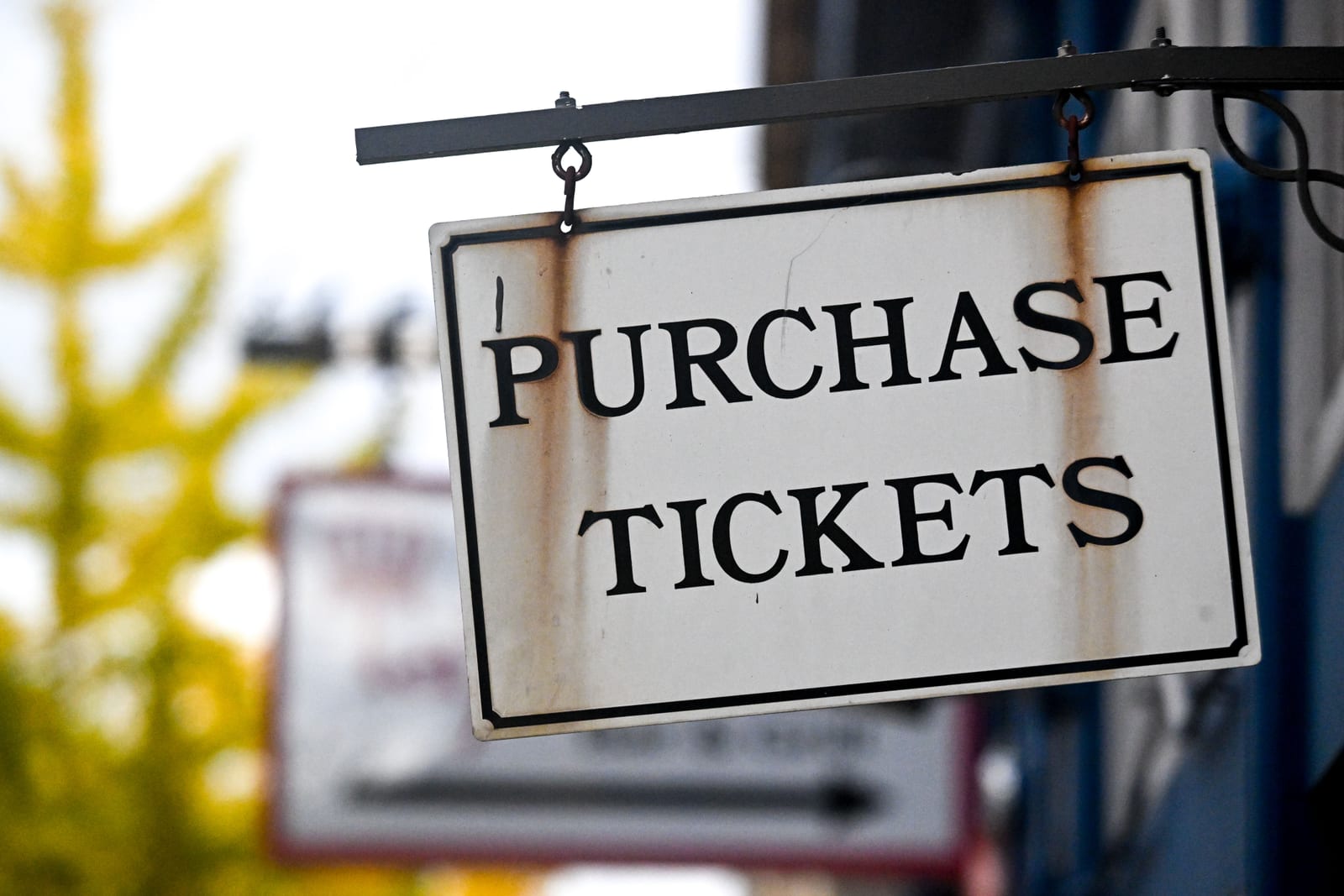
One rate, one sign, no tier ladder. The question is what that rate totals by the end of the year. · credit: Eyes2Soul / Pexels
Does TryBooking give nonprofits a discount?
No, and it says so on the record. The Australian pricing FAQ states that the same low fees apply to all account holders regardless of not-for-profit status, and the UK page makes the same argument in friendlier language: fees are kept low for everyone, including charities and PTAs, and the suggested workaround is to pass the fee on to your buyers.
That is a defensible position and TryBooking is upfront about it. It is also genuinely different from several rivals. Ticket Tailor gives registered charities a standing 50% discount. Humanitix runs a lower charity and school rate and directs its profits to charity. eventcloud runs a free-for-life plan for registered charities, state schools and religious nonprofits, up to three users, reviewed case by case. If you are a fundraiser, the absence of a discount is not a dealbreaker on a low-volume event, but it is a real number once volume climbs, and it is the single biggest gap in TryBooking's otherwise excellent pricing transparency.
What does TryBooking cost at 500, 5,000 and 50,000 tickets?
Here is the year, on a £50 ticket, in one currency. Figures are each platform's own published UK price. Where a platform says its fee includes card processing, that is stated in the fee column; where it does not, Stripe's standard UK rate of 1.5% plus 20p sits on top of the numbers shown.
| Platform and plan | Published UK fee per paid ticket | 500 tickets | 5,000 tickets | 50,000 tickets |
|---|---|---|---|---|
| TryBooking, standard | 5% plus 15p, VAT and card processing included | £1,325 | £13,250 | £132,500 |
| TryBooking, with your own Stripe | 75p flat, VAT included, Stripe fees on top | £375 | £3,750 | £37,500 |
| Ticket Tailor, pay as you sell | 60p plus VAT, Stripe fees on top | £360 | £3,600 | £36,000 |
| Ticket Tailor, prepaid credits | from 22p plus VAT, Stripe fees on top | £132 | £1,320 | £13,200 |
| eventcloud Team, one user | no per-ticket fee, £95 per user per month | £950 | £950 | £950 |
| eventcloud Charities and Schools | no per-ticket fee, free for life, up to three users | £0 | £0 | £0 |
Two honest caveats on that table. Ticket Tailor's 22p rate is its cheapest prepaid tier and requires buying a large block of credits upfront, so treat it as a floor rather than a default, and note that a ticket sold through a seating chart burns two credits rather than one. And Ticket Tailor's own pages disagree with themselves about the free-ticket ceiling, with the pricing page saying 5,000 free tickets a year and one FAQ saying 2,000, so ask before you plan around it.
What Would Zero Booking Fees Save You?
eventcloud charges a flat subscription, not a cut of every ticket. Compare it with what your current platform takes.
When does a flat subscription beat TryBooking's per-ticket rate?
Later than you would think on the Stripe route, and sooner than you would think on the standard one. Adding Stripe's 95p to every row that needs it and comparing like with like on a £50 ticket:
Against TryBooking's standard UK rate, a single eventcloud seat breaks even at about 560 paid tickets a year.
Against TryBooking's own-Stripe route at 75p, break-even moves out to about 1,270 tickets.
Against Ticket Tailor pay as you sell, about 1,320 tickets.
Against Ticket Tailor's cheapest prepaid credits, about 3,600 tickets.
Below those lines, the per-ticket platforms are cheaper and you should use one. Above them, the gap does not narrow, it widens forever, because one line is flat and the other is a slope. At 50,000 tickets TryBooking's standard rate has taken £132,500 and the flat seat has taken £950. That is not a discount, it is a different business model: one company is paid for software, the other is paid a share of your success.
Which is why the useful sum is not "which rate is lower" but "what does my actual year look like". Multiply your real ticket count by your real average price, apply the rate, and compare it to a subscription. The arithmetic is boring and it settles the argument in about ninety seconds.
What do you not get for the lower fee?
TryBooking is a very good community and culture ticketing tool, and it is not pretending to be a conference platform. Every account gets seating plans, custom forms, a scanning app, gift certificates, multi-user accounts, a Box Office app for card and cash at the door, a Xero integration and a developer API. That is a generous list for the money.
What it is thinner on is the heavy end of B2B events: complex multi-track agendas, exhibitor and sponsor management, badge production at scale. There is also a cash flow question. Unless you link your own Stripe account, ticket money lands in a TryBooking account balance that you withdraw from to a verified bank account, rather than arriving directly in yours. For a school production that is irrelevant. For a trade show paying venue deposits nine months out, it is worth asking about.
Who this is not for
Be honest with yourself about volume first. If you sell a few hundred tickets a year, or your tickets are cheap, or your events are free, TryBooking is very likely the right answer and a flat subscription would be a more expensive way to do the same job. Say so out loud before you shop further.
On the other side of the comparison, the flat model has real limits too. eventcloud is priced per user, from one user, so a ten-person team costs ten times a one-person team and the seat count is the variable rather than the crowd. White-label branding is an Enterprise arrangement, and there is no white-label add-on to buy. eventcloud does not do virtual or hybrid events. If most of your programme happens on a screen with a production layer behind it, Bizzabo or vFairs will serve you better. eventcloud is Stripe-only for payments. It does not offer PayPal, and it does not connect to a CRM, so if you run one you will be exporting and importing at your end.
So which should you pick?
Run your own number. Take your ticket count, your average price and your region, apply TryBooking's published rate, and put it next to a flat subscription. If the answer is under a few hundred tickets a year, stay per ticket and keep the difference. If it is in the thousands, or you are running several events a year and the total keeps climbing with every extra attendee, the flat line is the one that stops moving.
For the wider field, our 2026 platform fee table puts Eventbrite, Humanitix and Ticket Tailor side by side on the same ticket, and the Eventbrite versus TryBooking breakdown goes deeper on that specific pairing. If you want to see what a price that does not move with volume looks like, it is on the pricing page, and registered charities and state schools should start on the charities page instead.