Your subscription still charges per ticket because the subscription and the fee are paying for two different things. Whova bills a per-event licence and then 3.0% plus $0.99 on every paid ticket. RegFox Professional costs $499 a month and still takes $1.99 plus 1% a head. Eventcube Pro charges $99 a month to cut its cut from 5% to 3%. The only platforms where the subscription is the whole bill are flat licences: Swoogo at $11,800 a year, Bizzabo from $17,999, eventcloud at $1,250 per user.
What is a hybrid ticketing pricing model?
A hybrid is any rate card with two meters on it: a fixed amount you pay whether or not you sell anything, and a variable amount that rises with every ticket. It is the mobile phone contract of event software, a line rental plus a per-minute rate, and once you start looking for it, it is everywhere: Cvent's licence plus a per-registrant charge, Whova's licence plus a percentage, Eventcube's subscription that buys a smaller percentage.
The reason it matters is that the two meters answer different questions. The fixed part tells you what the platform thinks its software is worth. The variable part tells you what the platform thinks your success is worth to it. A pure per-ticket platform has only the second number. A pure licence has only the first. A hybrid has decided it wants both.
Why do platforms charge a subscription and a fee?
There are three different reasons, and they produce three different bills. Working out which one your platform is doing is most of the job.
The subscription buys features and the fee stays. This is Whova's model. The per-event licence, quoted by attendee band and never published, pays for the event app, the agenda and the sponsor tools. Registration is priced separately at 3.0% plus $0.99 per paid ticket, and the licence does nothing to reduce it. RegFox Professional works the same way: the $499 a month buys an onboarding specialist, a page-building service, single sign-on and a dedicated support team, while the per-registrant rate is identical to the free Premium plan. You are not paying the subscription to lower the fee. You are paying it for people and features, and the fee carries on regardless.
The subscription buys a lower rate. This is Eventcube's model. Starter is free and takes 5% of the transaction total. Pro is $99 a month billed annually and takes 3%. The $1,188 a year is a discount you purchase, and it only pays for itself once the 2% saved on your sales exceeds $1,188, which on a $50 ticket with no booking fee is 1,188 tickets. Below that line the free plan is cheaper. Above it, Pro is cheaper, and it is still a percentage.
Prepayment buys a lower rate. Ticket Tailor is the cleanest version. Pay-as-you-sell costs £0.60 a ticket; buy credits up front and the price drops as low as £0.22. It is not a subscription, but it rhymes with one: cash in advance in exchange for a cheaper meter. The meter is still running.
A subscription that still charges per ticket has not replaced the per-ticket model. It has added a monthly bill to it.
How much does each model cost at 500, 5,000 and 50,000 tickets?
The table assumes a $50 ticket, shows the platform's own charges only, and leaves card processing out of every row. Whova's per-event licence is quote-only, so its row is the registration fee alone with the licence noted on top. All rates are from each vendor's pricing page or published fee schedule as of September 2026.
| Platform and model | Fixed part | Variable part | 500 tickets | 5,000 tickets | 50,000 tickets |
|---|---|---|---|---|---|
| Whova (hybrid, licence buys the app) | Per-event licence, quote only | 3.0% + $0.99 per paid ticket | $1,245 plus licence | $12,450 plus licence | $124,500 plus licence |
| RegFox Professional (hybrid, licence buys services) | $5,988 a year | $1.99 + 1%, capped at $5.99 | $7,233 | $18,438 | $130,488 |
| Eventcube Pro (hybrid, licence buys a lower rate) | $1,188 a year | 3% of transaction total | $1,938 | $8,688 | $76,188 |
| RegFox Standard (pure per-head) | None | $0.99 + 1%, capped at $4.99 | $745 | $7,450 | $74,500 |
| Eventbrite (pure percentage) | None | 3.7% + $1.79 per paid ticket | $1,820 | $18,200 | $182,000 |
| Swoogo Professional (pure licence) | $11,800 a year, one full user | None | $11,800 | $11,800 | $11,800 |
| Bizzabo (pure licence, seat minimum) | $17,999 a year, three seats | None | $17,999 | $17,999 | $17,999 |
| eventcloud Team (pure licence per user) | $1,250 a year per user | None | $1,250 | $1,250 | $1,250 |
Two things jump out. First, RegFox Professional is more expensive than RegFox Standard at every volume, by exactly $5,988 plus $1 a ticket, because the subscription buys services rather than a rate cut. Second, Eventcube Pro at 50,000 tickets costs $76,188 against a free plan that would cost $125,000, which is a real saving and still sixty times the flat licence beneath it. A hybrid can be the cheapest row at one volume and the most expensive at another, and the pricing page never tells you which volume you are.
What Would Zero Booking Fees Save You?
eventcloud charges a flat subscription, not a cut of every ticket. Compare it with what your current platform takes.

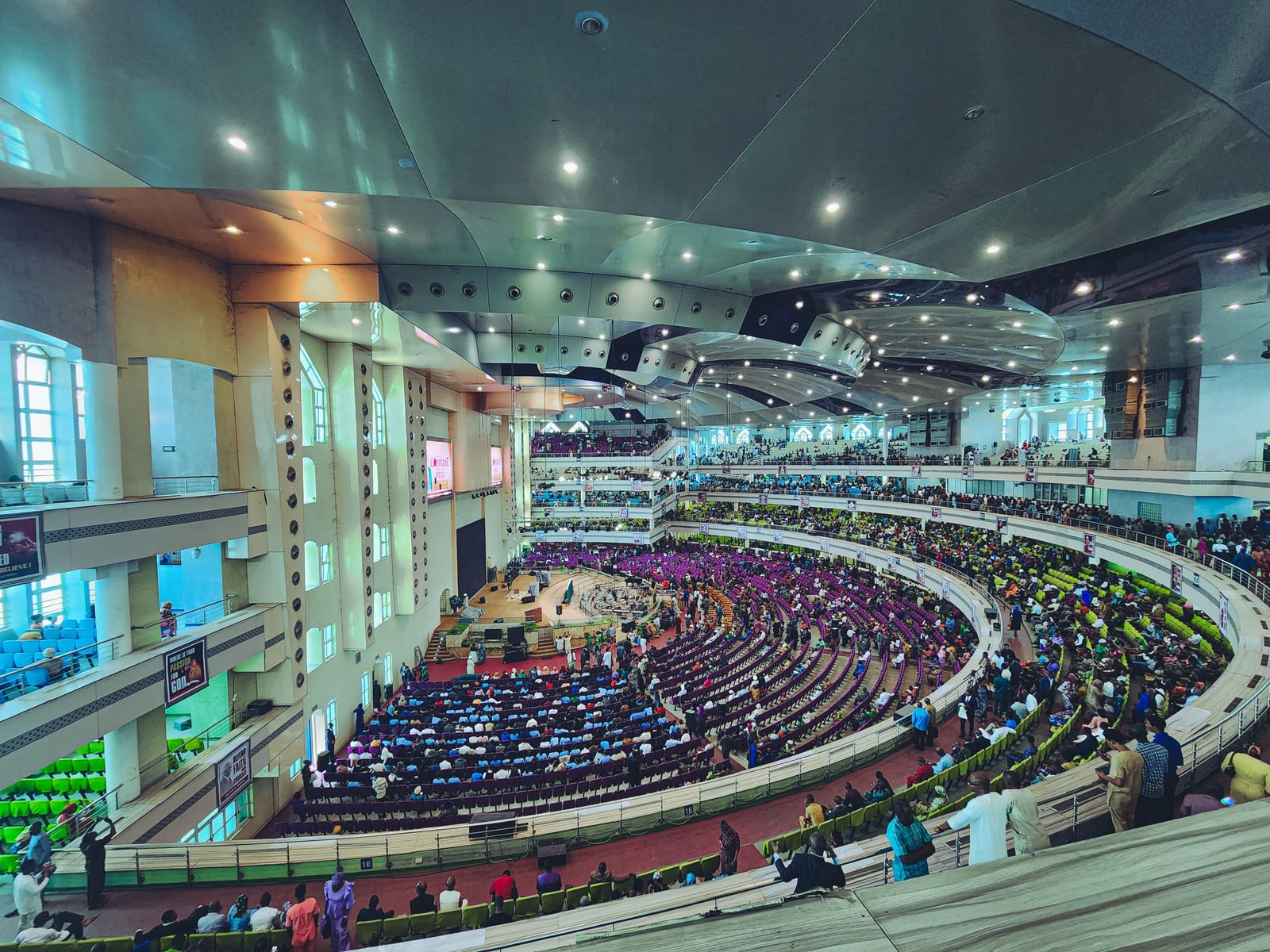
Every seat is a registrant to a per-head model and nothing at all to a per-user one · credit: Daniel Cruz / Pexels
Where does a hybrid stop being worth it?
Run the crossover the same way for any two rows: divide the difference in fixed cost by the difference in per-ticket cost. Against a $1,250 eventcloud seat, Eventcube Pro's $1,188 licence leaves only $62 of headroom, so its 3% overtakes the flat seat from the 42nd $50 ticket. Whova's registration fee alone passes $1,250 at 503 tickets, before a single dollar of the per-event licence is counted. RegFox Standard, the pure per-head line with no subscription at all, crosses at 840 tickets. RegFox Professional starts $4,738 behind before the first ticket sells.
The general rule: the smaller the fixed part and the larger the variable part, the sooner the hybrid stops paying. And the variable part is the one that grows in your best year, which is precisely when you would rather it did not.
What should you ask a platform with two meters?
Four questions, all of which have short answers if the sales team is being straight with you.
Does the subscription reduce the per-ticket rate, or sit beside it? Eventcube's does. Whova's and RegFox's do not. The answer changes the arithmetic completely.
Is the fee charged on the face value or on the transaction total? Eventcube charges its percentage on the ticket price plus the booking fee added to it, so the 3% is on a bigger number than the one you set. RegFox caps its fee per registrant, which quietly turns it into a flat per-head charge on any ticket over about $400.
Do free registrations cost anything? Whova's fee applies to paid tickets only. RegFox charges $0.99 per free registrant on Standard and Professional and $1.99 on Premium, which matters for a corporate event that gives most of its seats away.
What happens to the bill if the event doubles? On a flat licence, nothing. On a hybrid, the variable meter doubles and the fixed meter does not, so the answer is "somewhere in between", and you should make them show you exactly where.
What unlimited means on a flat licence, and what it does not
Because eventcloud sits in the pure-licence row, the honest edges belong here. On eventcloud, the subscription is the entire platform bill: unlimited events, unlimited tickets, unlimited registrations and unlimited attendees, at $1,250 a year or $125 a month per user, from the first user. There is no percentage, no per-registrant line and no per-event licence. Ticket money goes straight into the organiser's own Stripe account, and Stripe's processing fee is Stripe's, charged at Stripe's published rate with nothing added.
What it is not: it is not unlimited users, since every colleague who needs a login is a seat. It is not every feature on every tier, since white-label branding lives in the Enterprise agreement and there is no white-label add-on to buy on a Team seat. And it does not extend to formats the product does not do. The full rate card is on the pricing page, and the pure-model version of the table above, with Cvent and Humanitix added, is in what ticketing costs at 500, 5,000 and 50,000 tickets.
Who this is not for
A flat licence is the wrong answer for an organiser selling a few hundred tickets a year. Below about 840 tickets at $50, RegFox Standard's per-head model is cheaper than an eventcloud seat, and below 1,188 tickets Eventcube's free plan beats its own Pro plan; either is the sensible choice for a small annual event. eventcloud does not do attendee networking or matchmaking. If your delegates expect an app that pairs them with each other, Whova earns its licence. eventcloud does not do virtual or hybrid events. If most of your programme happens on a screen, look elsewhere. Stripe is the only outside system eventcloud talks to. If you need more than that, RegFox publishes a long list of third-party links and is the better fit.
Where eventcloud fits
For conferences, trade shows and corporate events that sell in the thousands on tickets priced in the hundreds, a hybrid is the worst of both worlds: a licence to approve and a percentage to watch. eventcloud's answer is one meter, set by how many people log in, and never by how many tickets go out. Whether that is the right model for you depends entirely on the row of the table you are sitting in, so run it with your own numbers before the demo. If the variable column is the one that frightens you, the Eventbrite comparison shows what a flat line looks like next to a climbing one.