About £23 a ticket, on the one platform that publishes both prices. TryBooking UK charges 5 per cent plus 15p through its own gateway, or a flat 75p if you connect your own Stripe account. Below roughly £23 the gateway is cheaper. Above it, your own Stripe wins, and the gap widens with every pound you add to the ticket price.
That number is unusually easy to check, because TryBooking is one of the few platforms that prints two rate cards on the same page and lets you pick. Most platforms print one, quietly assume they are the merchant of record, and leave you to work out what that assumption is costing.
What does "your own processor" actually mean here?
It means the card payment lands in an account with your name on it, not the platform's. Stripe, PayPal or Square takes its cut, the platform takes a separate fee for the software, and nobody sits between the buyer's card and your bank except the processor you chose. We have written separately about whether you can integrate your own processor at all and about what card processing actually costs. This piece is narrower and more annoying: it is about the price difference between the two routes, and the exact ticket price at which switching stops being a rounding error.
The reason the difference exists is not generosity. When a platform is merchant of record it carries the card scheme relationship, the chargeback exposure and the float, and it prices all three into a percentage. When you carry them, it charges you for software instead. One of those numbers grows with your ticket price. The other does not.

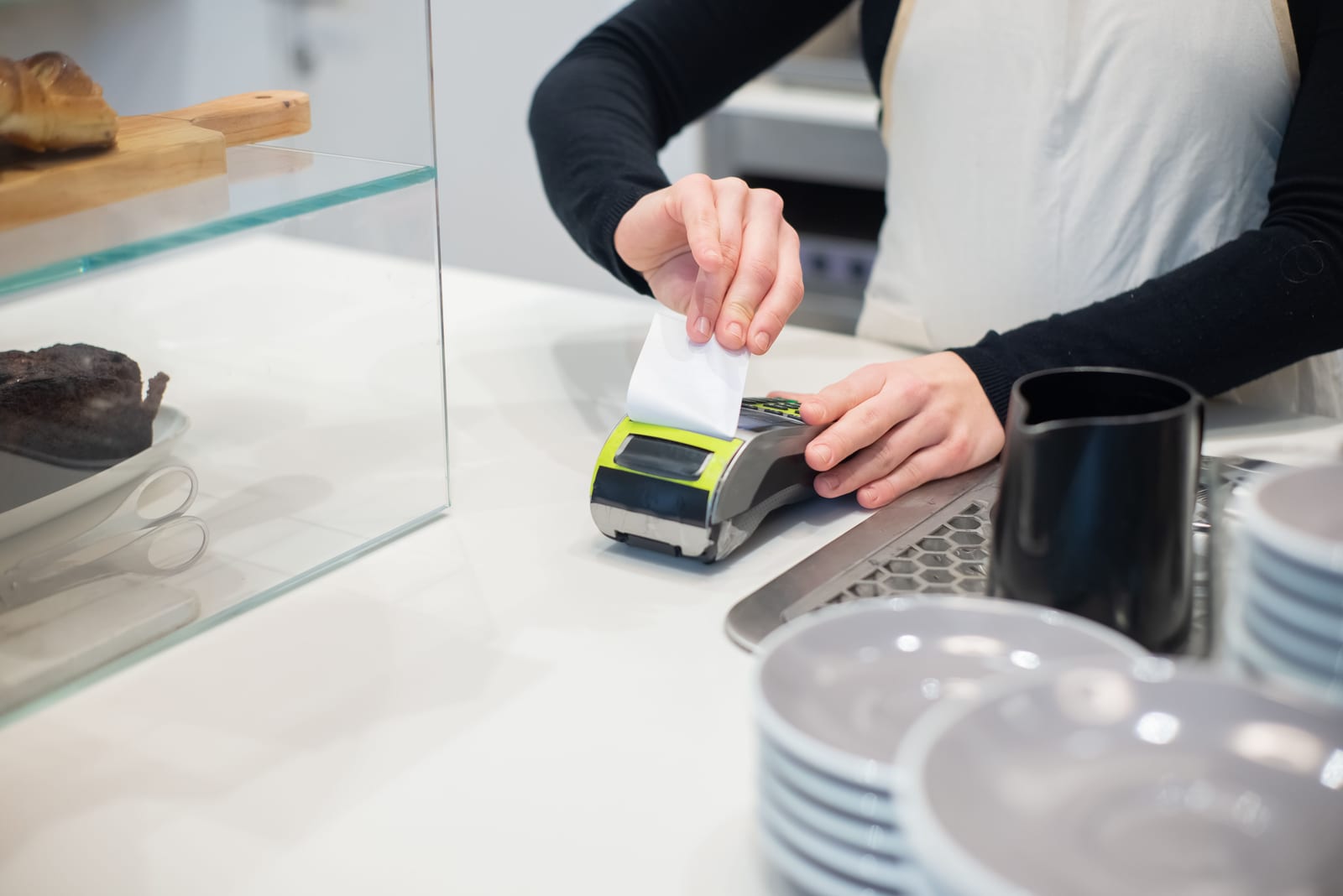
Merchant of record is just a formal way of asking whose drawer it lands in first · credit: Clement Proust / Pexels
What is the actual price difference on a real rate card?
On TryBooking UK, the two published routes for a paid ticket are 5 per cent plus 15p through TryBooking's gateway, which the company states includes VAT and all payment processing, or a flat 75p per ticket when you link your own Stripe account, on top of whatever Stripe charges you. Stripe's UK rate for a standard UK card, which TryBooking quotes on the same page, is 1.5 per cent plus 20p.
Run those against each other and the crossover sits at £22.86. On a £20 ticket the gateway costs £1.15 and your own Stripe costs £1.25, so bringing your own processor loses you 10p a ticket. On a £50 ticket the gateway costs £2.65 and your own Stripe costs £1.70, a saving of 95p, or about 36 per cent. On a £150 ticket the gateway costs £7.65 and your own Stripe costs £3.20.
Nobody publishes that crossover, including the platform, and it is the single most useful number in this whole subject. If you sell cheap tickets in volume, the percentage route can genuinely be the better deal. If you sell conference passes, it is not close.
What does the same event cost on each route?
A £50 ticket, UK rates, platform fee plus payment processing, organiser absorbing everything. Own-processor rows include Stripe's standard UK card rate of 1.5 per cent plus 20p.
| Platform and route | Who holds the money first | Per £50 ticket | 500 tickets | 5,000 tickets | 50,000 tickets |
|---|---|---|---|---|---|
| Eventbrite UK | Eventbrite | £4.07 | £2,033 | £20,325 | £203,250 |
| TryBooking UK, TryBooking gateway | TryBooking | £2.65 | £1,325 | £13,250 | £132,500 |
| TryBooking UK, your own Stripe | You | £1.70 | £850 | £8,500 | £85,000 |
| Ticket Tailor, pay as you sell, your own Stripe | You | £1.67 | £835 | £8,350 | £83,500 |
| eventcloud, your own Stripe | You | £0.95 in Stripe fees | £950 for a seat plus £475 | £950 for a seat plus £4,750 | £950 for a seat plus £47,500 |
Two notes on comparability, because they matter. TryBooking states its fees include VAT; Ticket Tailor quotes 60p plus VAT, which is the 72p used above; Eventbrite's UK fee schedule does not say either way on the page it publishes. And the eventcloud row splits into two parts on purpose: the only cost that moves with volume is Stripe's, because the platform component is an annual seat at £950 per user that reads the same in the 500 row and the 50,000 row.
What Would Zero Booking Fees Save You?
eventcloud charges a flat subscription, not a cut of every ticket. Compare it with what your current platform takes.
Which platforms even offer you the choice?
Fewer than you would hope, and they do not advertise it.
Ticket Tailor is own-processor by design and says so bluntly on its pricing page: it does not touch or process the payment for your tickets, and you need a Stripe, PayPal or Square account to sell at all. Its own fee is 60p per ticket plus VAT pay as you sell, or prepaid credits advertised from 22p.
TryBooking UK offers both, priced differently, as above.
Humanitix supports connecting your own Stripe account, and its help centre states that sales then go directly into your Stripe account rather than being managed by Humanitix, with payout scheduling under your control.
Eventbrite publishes no own-processor route on its UK pricing. Its fee schedule lists a service fee of 6.95 per cent plus 59p per sold ticket for UK payouts with payment processing marked not applicable, which is another way of saying it is already in there. Worth noting that Eventbrite's UK pricing page currently advertises the United States figures, in dollars, while the help centre carries the real UK rate.
eventcloud connects to the organiser's own Stripe account and nothing else. That is the whole payment story, which is either exactly what you wanted or a dealbreaker.
What do you take on when you become merchant of record?
The saving is real and so is the work. Holding the merchant relationship means chargebacks come to you, refunds come out of your balance rather than being netted off a platform payout, disputes are yours to evidence, and your processor will want the usual identity and business verification before it lets you take money. Payout timing becomes your decision instead of a policy you inherit, which is usually the point, but it also means nobody is holding a reserve on your behalf when a show is cancelled and every buyer wants their money back in the same fortnight.
There is also a boring practical trap. If your finance team reconciles from platform reports, and the money now arrives from Stripe rather than the platform, someone has to rebuild that reconciliation. Budget an afternoon and a slightly irritated bookkeeper.
At what volume does a flat subscription beat both?
When the per-ticket line stops being small. A 60p fee looks like nothing and costs £36,000 across 50,000 tickets. That is the arithmetic the whole category is built on: the fee is designed to feel trivial per unit and to scale without limit.
A flat subscription inverts that. eventcloud charges £950 per user per year for unlimited events, unlimited tickets and unlimited registrations, with payments running through your own Stripe account, so the platform line is identical whether you sell 500 tickets or 50,000. Your success is never a billing event.
The honest direction of that trade, including the part that does not flatter us. Ticket Tailor's own-Stripe route costs 72p a ticket including VAT, so a single eventcloud seat is the same money as 1,319 tickets on Ticket Tailor. Below roughly 1,300 paid tickets a year, Ticket Tailor is cheaper and you should use it. Above it, the flat line pulls away and keeps pulling, because one of these numbers has a ceiling and the other does not.
Who this is not for
eventcloud does not do virtual or hybrid events. If most of your programme happens on a screen with a production gallery behind it, Bizzabo or vFairs will serve you better.
eventcloud connects to Stripe and to no other payment provider. If your finance team has standardised on PayPal or Square, Ticket Tailor supports all three and is the more sensible choice.
eventcloud is priced per user, from one, so a two-events-a-year organiser selling a few hundred cheap tickets will pay less on a pay as you sell platform. And there is no white-label add-on to buy at any price, because branding depth is handled through the enterprise agreement rather than sold as a line item.
If the numbers above look like your event, the pricing page has the flat version and the Ticket Tailor comparison has the honest head to head, including where a box office beats a platform.